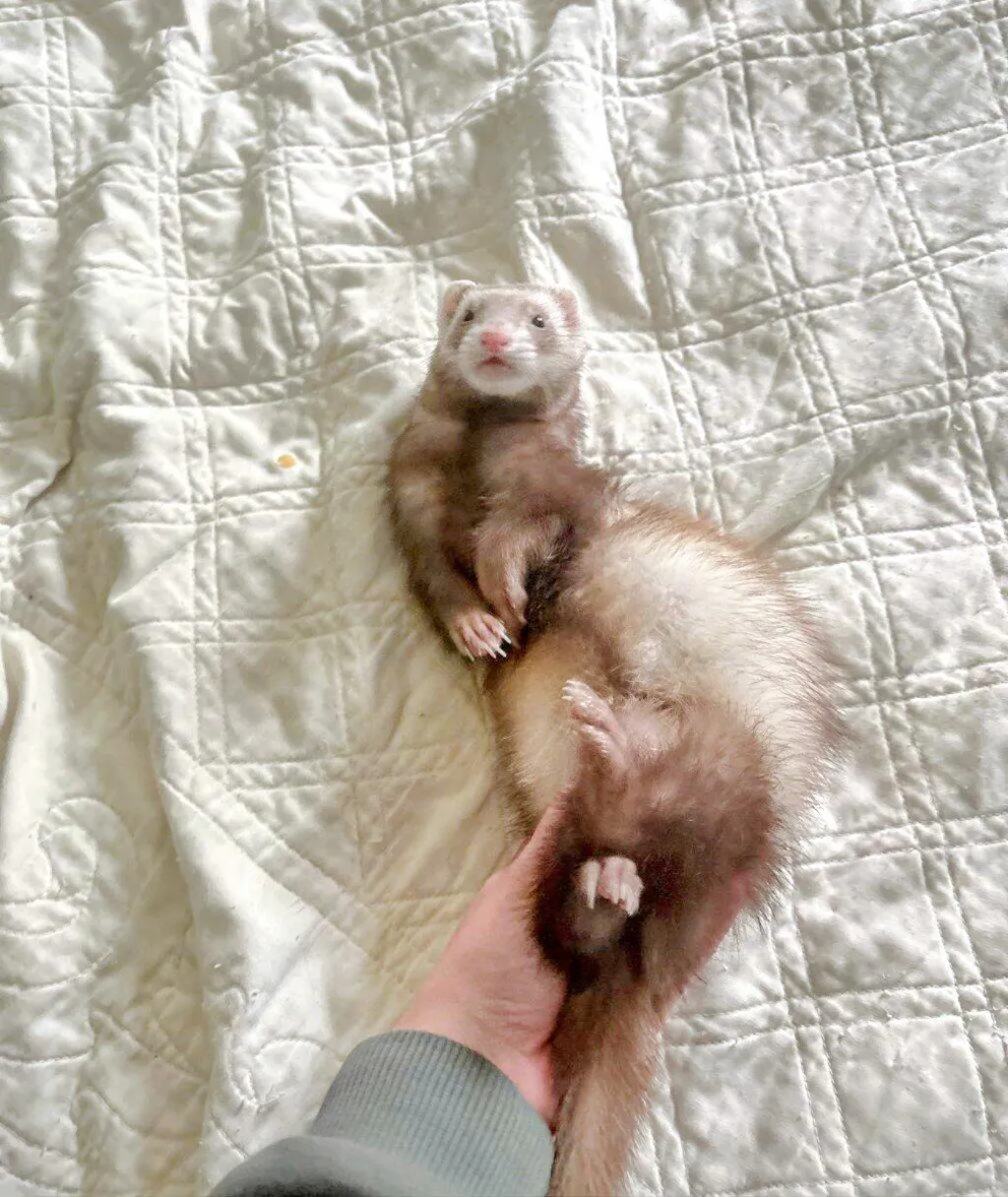
The World's First Air-Dried Complete Diet Made for Ferrets

Updated: 2026 | Category: Nutrition & Feeding
Every air-dried pet food on the market was formulated for cats or dogs. Ferret owners have been adapting these products for years because nothing better existed. ZiwiPeak, Orijen, Acana: all excellent foods, none of them built around what a ferret actually needs.
That changes in 2026.
The Pampered Ferret Air-Dried Complete Ferret Food is the first air-dried diet formulated specifically to meet ferrets' unique nutritional requirements. Not adapted from a cat formula. Not marketed toward ferrets as an afterthought. It is built from the ground up with ferret biology as the starting point.
This page explains what went into it and why. If you're the kind of owner who reads ingredient labels and questions everything, this is written for you!
On this page:
- What air-drying actually does to food
- Full ingredient breakdown with biological reasoning
- Guaranteed analysis explained in ferret terms
- How it compares to kibble, freeze-dried, air-dried cat food, and raw
- Waitlist signup for launch access
Ingredients
Lamb, Lamb Kidney, Lamb Liver, Lamb Bone Powder, Condensed Fish Protein Digest, Dried Apple Pomace, Inulin, Lecithin, New Zealand Green-Lipped Mussels, Natural Preservative (Citric Acid (a preservative), Distilled White Vinegar), Magnesium Sulfate, Natural Antioxidant (Silicon Dioxide, Citric Acid (a preservative), Mixed Tocopherols (preservative), Vegetable Oil, Rosemary Extract), Taurine, Dried Kelp, Yeast Extract, Vitamin E Supplement, Zinc Amino Acid Complex, Vitamin B3 (Niacin), Potassium Chloride, Copper Amino Acid Complex, Manganese Amino Acid Complex, Iron Amino Acid Complex, Vitamin B5 (Calcium Pantothenate), Vitamin B1 (Thiamine Mononitrate), Menadione Sodium Bisulfite Complex (Source of Vitamin K Activity), Vitamin A Supplement, Vitamin B12 Supplement, Vitamin B2 (Riboflavin), Vitamin B6 (Pyridoxine Hydrochloride), Sodium Selenite, Biotin, Folic Acid, Vitamin D3 Supplement, Calcium Iodate, Vitamin C (Ascorbic Acid)
Subject to final regulatory approval.
💨 What Air-Dried Actually Means
Air-drying removes moisture from raw ingredients at low temperatures, typically between 104°F and 122°F, over an extended period. No high-heat extrusion. No pressure cooking. The process preserves the nutritional integrity of raw meat in a way that kibble manufacturing cannot.
Here's how the main diet formats compare:
Kibble is extruded at temperatures exceeding 300°F. Heat destroys heat-sensitive nutrients, denatures proteins, and requires synthetic vitamin and mineral supplementation to compensate. Most kibble also contains starches and binders to hold the pellet together, adding carbohydrates ferrets have no biological use for.
Freeze-dried raw preserves nutrients exceptionally well but requires rehydration, is expensive at scale, and is typically positioned as a treat or supplement rather than a complete daily diet.
Fresh or frozen raw is nutritionally optimal but requires careful sourcing, handling, and balancing. An unbalanced raw diet causes more harm than a good commercial diet.
Air-dried sits between freeze-dried and kibble. It handles like dry food, stores at room temperature, requires no rehydration, and retains more nutritional value than any extruded product. For owners who want raw diet benefits without raw diet logistics, it's the practical choice.
The format has been available for years. What hasn't existed until now is a version built around ferret biology rather than borrowed from the cat food aisle.
🥩 What's In It and Why
Ferrets are obligate carnivores. Their digestive tract runs 3-4 hours from end to end. They have no meaningful ability to process plant matter, grains, or complex carbohydrates. Every ingredient in this formula was chosen with that biology as the filter.
The Protein Foundation
More than 95% of this formula is meat, organ, and bone. That number matters because most pet foods, even premium ones, use plant proteins, starches, and fillers to reach their protein percentages. Every gram of protein in this formula comes from animal sources.
Lamb leads the ingredient list, followed by Lamb Kidney and Lamb Liver. Organ meat is nutritionally denser than muscle meat. Kidney and liver provide naturally occurring vitamins A, B12, and iron at levels muscle meat alone cannot match. Ferrets in the wild consume organs as a priority. This formula reflects that.
Condensed Fish Protein Digest adds a secondary protein source with a complete amino acid profile. This ingredient gives the formula something most air-dried cat foods lack: protein diversity beyond a single meat source. The hydrolyzed fish protein contributes omega-3 fatty acids and delivers highly digestible amino acids that support ferrets with compromised gut function. It also adds natural taurine precursors.
Lamb Bone Powder provides the calcium-phosphorus ratio ferrets need for skeletal health. The ratio mirrors what a ferret would obtain from consuming whole prey, without the risks of whole bone fragments.
⚠️ No Peas. No Legumes. Here's Why That Matters.
Peas and legumes appear in a significant number of commercial ferret and cat foods, often in the top five ingredients. In ferrets, pea consumption has been associated with struvite bladder stone formation in some cases. Peas also contribute plant-based protein that inflates the crude protein percentage on the label without delivering the amino acid profile ferrets require from animal sources. Some foods use peas specifically to hit a protein number on the guaranteed analysis while reducing more expensive meat inclusion.
This formula contains no peas, no lentils, no chickpeas, and no legume derivatives of any kind. Every gram of protein comes from animal sources.
The Functional Minor Ingredients
Everything outside the meat, organ, and bone base including the fiber ingredients, lecithin, New Zealand green-lipped mussels, and the full vitamin and mineral premix totals less than 5% of the formula combined. Each ingredient in this group is there for a specific biological reason. None of them are fillers.
New Zealand Green-Lipped Mussels
Sourced from New Zealand, green-lipped mussels are a natural source of chondroitin sulfate and glucosamine, two compounds that support joint health and cartilage integrity. Most ferret foods don't include them at all. This formula lists green-lipped mussels as a featured standalone ingredient rather than burying them in an organ blend. The inclusion is relevant for ferrets of all ages but particularly for older ferrets and those managing adrenal disease, which causes progressive muscle and tissue wasting.
Inulin from Chicory Root
This is the ingredient that raises the most questions in ferret communities, and the concern is worth addressing directly.
Inulin is classified as a fructooligosaccharide. That name sounds like sugar, and that's where the confusion starts. But inulin behaves nothing like sugar in the body. It is not digestible. Human and animal digestive enzymes cannot break it down. It passes through the small intestine completely intact, triggers no insulin response, raises no blood glucose, and reaches the colon where gut bacteria ferment it as a prebiotic.
The insulinoma concern for ferrets is specifically about digestible sugars and simple carbohydrates that spike blood glucose and demand an insulin response. Inulin does none of this. It is metabolically inert as a sugar. Its only function in this formula is feeding beneficial gut bacteria to support microbiome health, which improves nutrient absorption and immune function.
The inclusion rate is well under 1% of the total formula.
Dried Apple Pomace
The same logic applies here, and again the community concern is understandable but based on a misidentification of what dried apple pomace actually is.
The worry about fruit ingredients in ferret diets is fructose, the digestible sugar found in fruit flesh and juice. Dried apple pomace is not fruit. It is the fibrous cell wall material remaining after juice and pulp extraction. The fructose is removed during processing. What remains is pectin and cellulose, neither of which is digestible, neither of which raises blood glucose, and neither of which has any relevance to insulinoma risk.
Dried apple pomace functions mechanically: it supports healthy stool formation and gut motility by forming a mild gel in the digestive tract that assists water absorption. For ferrets on high-fat diets, which this is, that has practical value in stool consistency.
The 3% fiber maximum on the guaranteed analysis is a label ceiling, not a target. The actual combined inclusion of inulin and dried apple pomace in this formula is well under 1% of the total. Both are minor ingredients within the broader group of non-meat components that total less than 5% of the formula combined.
Lecithin
Lecithin is an emulsifier. In a formula with 25%+ fat content, fat distribution during air-drying is a technical challenge. Without an emulsifier, fat pools unevenly through the mix, creating inconsistent nutrition per serving and accelerating rancidity at the surface. Lecithin binds water and fat molecules together during processing, ensuring even fat distribution through every batch.
The inclusion rate is minor. It carries no meaningful nutritional contribution to the finished diet beyond this technical processing role. Lecithin is derived from sunflower seeds through a mechanical extraction process and contains phospholipids that support the emulsification function. It contains no plant protein and does not contribute to the protein percentage on the label. At trace inclusion levels, it has no impact on the formula's macronutrient profile or carnivore appropriateness.
Vitamin & Mineral Premix
The premix completes the nutritional profile. Three inclusions worth noting: Taurine is added directly because ferrets require it for cardiac health and cannot synthesize adequate amounts from diet alone. This matters. Most air-dried cat foods rely on organ meat alone to meet taurine requirements. This formula supplements it explicitly. Chelated mineral complexes for zinc, copper, manganese, and iron use amino acid bonding for superior absorption compared to inorganic mineral salts. Yeast Extract provides naturally occurring B vitamins and supports palatability at trace inclusion levels.
Natural Preservation
The formula uses Citric Acid, Distilled White Vinegar, and Mixed Tocopherols. Mixed Tocopherols are vitamin E in its natural form. Citric Acid and vinegar provide pH control that inhibits microbial growth. No BHA. No BHT. No ethoxyquin.
Natural Antioxidant (Silicon Dioxide, Rosemary Extract)
Silicon dioxide is one of the most misunderstood ingredients in pet food labels. It appears industrial because it's also found in sand and glass. The food-grade form is entirely different. It's a naturally occurring mineral used in trace amounts as an anti-caking agent. Its job is to prevent powdered ingredients in the premix from clumping together during manufacturing and storage. It has no nutritional function and no biological effect at the inclusion rates used in pet food. The FDA classifies food-grade silicon dioxide as Generally Recognized as Safe (GRAS).
Rosemary Extract is a natural antioxidant derived from rosemary leaves. It protects the fat content in the formula from oxidation, which is the primary cause of rancidity in high-fat foods. This is a functional preservation role, the same job BHA and BHT perform in conventional pet foods, without the synthetic chemistry. There is no pharmacological dose of rosemary at these inclusion rates and no evidence of the herb-related concerns sometimes raised in ferret communities at the trace amounts used for preservation purposes.
📊 What the Numbers Mean
Guaranteed analysis numbers on pet food labels are minimums and maximums, not exact values. The label tells you the floor for protein and fat and the ceiling for fiber, ash, and moisture. Actual tested values typically run higher for protein and fat. We will update this section with confirmed tested values when available from our manufacturer.
| Nutrient | Guaranteed Value | What It Means for Ferrets |
|---|---|---|
| Protein (min) | 35% | 100% animal-sourced. On a dry matter basis this is approximately 40% well above the 30% DMB minimum for healthy adult ferrets (Iske 2024). As-fed values on air-dried food read lower than actual nutrient density due to retained moisture. |
| Fat (min) | 25% | Exceeds standard recommendations. Ferrets are fat-adapted; fat is their primary energy source. At approximately 29% on a dry matter basis, this formula supports energy levels, coat condition, and weight maintenance. |
| Dietary Fiber (max) | 3% | The ceiling, not the target. Actual fiber from inulin and dried apple pomace runs well below this. Both are prebiotic fibers, not digestible carbohydrates. |
| Ash (max) | 10% | Reflects the mineral content from lamb bone powder and organ meats. Consistent with high-meat air-dried and raw formats. Lower than most air-dried cat foods, which signals less bone filler relative to meat content. |
| Moisture (max) | 13% | Shelf-stable without refrigeration. Always provide fresh water alongside any dry format. |
On protein and fat: 35% protein and 25% fat are guaranteed minimums as-fed. On a dry matter basis which removes moisture from the calculation and is the correct way to compare foods with different moisture levels protein is approximately 40% and fat is approximately 29%. Both exceed the minimum recommendations for healthy adult ferrets (Iske 2024). As-fed values on air-dried food look lower than kibble on paper, but the dry matter comparison is where this format wins.
On fiber: Ferrets have almost no capacity to digest fiber. Their 3-4 hour digestive transit time means fiber passes through largely unprocessed. The 3% maximum here is a ceiling, not a target. The inulin and dried apple pomace in this formula are present in trace amounts for specific functional reasons, not as bulk.
On moisture: Raw and frozen raw diets run significantly higher moisture as fed, typically above 65%, which contributes meaningfully to daily hydration. Air-dried at 13% maximum sits closer to kibble on the moisture spectrum, which makes fresh water availability even more important.
Caloric Density
Metabolizable energy is 4,040 kcal/kg (404 kcal/100g), calculated by the manufacturer. This is a calorie-dense diet. Most ferrets will need smaller portions by weight than they are used to with standard kibble. Start with the feeding guidelines below and adjust based on your ferret's weight and energy level.
A Note on Carbohydrates
Calculated total carbohydrates are 17% as-fed. We know that number raises questions for ferret owners who follow low-carb protocols, particularly for ferrets managing insulinoma.
The carbohydrate figure here comes entirely from dried apple pomace and inulin. These are prebiotic fibers. They are not starches, sugars, grains, or legumes. They do not digest and they do not contribute to blood glucose. This diet contains no potato, pea, corn, wheat, rice, or added sugar of any kind.
Context matters. A 17% carbohydrate diet built entirely from indigestible fiber is metabolically different from a 12% carbohydrate diet that includes potato starch or pea flour. Most kibbles run 25-35% carbohydrate. This formula sits well below that ceiling, and every carbohydrate present serves a functional role in gut health rather than acting as cheap filler.
If your ferret has insulinoma and you are managing their diet under veterinary guidance, discuss this diet with your vet before switching. For healthy adult ferrets, the source of carbohydrates matters as much as the total number.
⚖️ How It Compares
Most ferret owners are feeding one of four diet types right now: kibble, freeze-dried raw, air-dried cat food, or balanced raw. Here's how this formula sits against each.
vs. Kibble
Kibble is the most common ferret diet by volume, largely because it's accessible and affordable. The nutritional tradeoffs are real. Extrusion destroys heat-sensitive nutrients, requiring synthetic supplementation to compensate. Most kibble contains starches, grains, or legumes as binders. Many contain peas. Protein percentages look competitive on the label but frequently include plant protein that ferrets cannot efficiently utilize.
Some of the more ferret-appropriate kibbles available right now are Young Again and Oxbow Essentials, both pea-free with high animal-based protein percentages. Both are solid options within the kibble category. Neither was formulated for ferrets. Neither reaches the ingredient quality ceiling that air-drying allows, and both are extruded at temperatures that degrade heat-sensitive nutrients regardless of ingredient quality going in.
Air-dried wins on ingredient integrity, protein source quality, and nutrient preservation. Kibble wins on price and availability.
vs. Freeze-Dried Raw
Freeze-dried raw is nutritionally excellent. The process preserves nutrients better than any other commercial format. The practical limitations are real: cost at scale is high, rehydration is required for complete nutrition, and most freeze-dried products are positioned as treats or toppers rather than complete daily diets.
If you're already using freeze-dried raw as a supplement or treat, TPF's freeze-dried salmon, chicken, and beef kidney deliver the same format in single-ingredient form. Air-dried sits just below freeze-dried raw on nutrient preservation but significantly above it on practicality as a complete daily diet. No rehydration required. Lower cost per serving. Handles exactly like dry food.
vs. Air-Dried Cat Food
ZiwiPeak Air-Dried Cat Food scores A+ on ferret nutrition charts and gets recommended in ferret communities. It's a good product. It wasn't built for ferrets.
Cat nutritional requirements differ from ferret requirements on taurine levels, protein density, fat ratios, and micronutrient balance. AAFCO cat food standards set different targets than ferret biology demands. Taurine minimums for cats run lower than what ferrets need for cardiac health. Fat requirements for ferrets run higher than most cat formulas target.
This formula was built to ferret biology from the ground up not cat biology with ferrets as an afterthought. The differences show up in the details:
Taurine supplementation. ZiwiPeak relies on lamb heart content to meet taurine requirements. This formula adds taurine directly as a standalone ingredient. For ferrets prone to dilated cardiomyopathy linked to taurine deficiency, that explicit supplementation is a meaningful ferret-specific decision.
Dual protein sources. ZiwiPeak uses lamb exclusively. This formula combines lamb with condensed fish protein digest, which adds amino acid diversity and omega-3 fatty acids that a single-meat formula cannot deliver.
More complete vitamin panel. This formula includes a fuller micronutrient profile across vitamins A, E, K, C, and the full B-complex including biotin. ZiwiPeak's vitamin grouping is more minimal by comparison.
Lower ash. 10% maximum ash versus 12% for ZiwiPeak signals less bone filler relative to meat content. That's a quality indicator worth noting.
Price. This formula is priced below ZiwiPeak at full retail and competitive even against their autoship pricing. You're getting a ferret-specific formulation at a lower cost per ounce than the cat food alternative.
ZiwiPeak has advantages too. Their organ variety is broader tripe, lung, heart, spleen, cartilage which delivers a richer whole-prey profile than this formula. Their caloric density is higher at 4,950 kcal/kg versus 4,040 kcal/kg here, which matters for ferrets with high metabolic rates. Both are excellent foods. One was built for cats. The other was built for ferrets.
vs. Balanced Raw
Whole prey and balanced raw remain the gold standard. Nothing replicates the bioavailability of fresh raw meat and organs fed in natural ratios, and the ferret community's raw feeding advocates are right about that.
The barriers are real for many owners: sourcing, handling, freezer space, sanitation, and the nutritional knowledge required to balance a raw diet correctly. For raw feeders managing multiple ferrets, traveling, or looking for a shelf-stable backup, air-dried is the closest commercial alternative to what you're already doing. For owners considering raw but not ready to commit to the logistics, this is the practical bridge.
📬 Be the First to Know
The Pampered Ferret Air-Dried Complete Ferret Food launches Fall 2026.
We're building the waitlist now. Waitlist subscribers get first access when the product drops and updates as we get closer to the release date.
If you've read this far, this food was made for your ferret.
🐾 About The Pampered Ferret
The Pampered Ferret has been making ferret-specific products since 2020. Everything we make starts with one question: what does a ferret actually need? Not what works for cats. Not what's cheap to source. What ferret biology requires.
Our freeze-dried treats, Dook Soup, and salmon oil are used by ferret owners across the US and rated A+ by the ferret nutrition community. The air-dried diet is the next step: a complete daily food held to the same standard.
We're ferret people. This is what we do.
Related Reading
- What Do Ferrets Eat everything ferrets need from their diet and why food format matters
- Best Ferret Food 2026 how every major ferret food compares on protein, fat, and ingredient quality
Ready to try our current complete diet? Shop Dook Soup the only freeze-dried complete raw ferret diet on the market.
Questions about the formula or launch timeline? Email us at hello@thepamperedferret.com
Developed in consultation with exotic veterinarians and veterinary nutritionists.